Welcome to this week’s Fortune Gulf Brief. We’ll be covering:
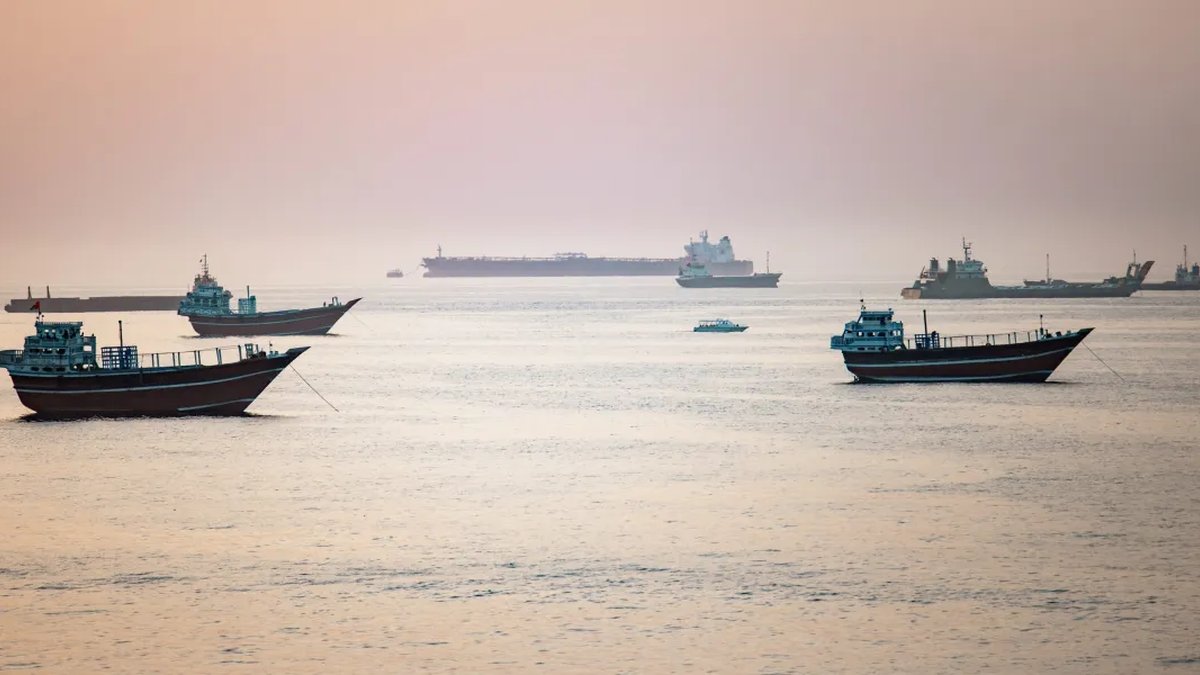
- Gulf oil flows return as market eyes potential glut
- Mubadala unlocks $25bn credit portfolio for outside investors
- U.S.’ Lux Capital leads Gulf’s $30 million AI funding round
- Saudi courts China amid strained U.S. relations
OPEC+ has agreed to raise oil production by a further 188,000 barrels per day from August, marking the fifth consecutive monthly increase in output quotas as the group continues to unwind its earlier production cuts.
That brings the total increase in output quotas to around 940,000 barrels a day since the war began.
The move comes as oil prices continue to ease amid Gulf states ramping up production and the reopening of the Strait of Hormuz calming fears of major supply disruptions.
Brent crude is now trading around $72 per barrel, down from its April peak of $126 per barrel and close to pre-conflict levels.
Saudi Arabia, the world’s top exporter, shipped an average of 6.3 million barrels a day last week, restoring flows to almost 90% of February’s pre-war levels.
Meanwhile, UAE oil exports have now overtaken pre-war levels, according to data compiled by energy intelligence company Kpler.
The country, which formally exited OPEC+ on May 1, shipped 3.94 million barrels a day of crude and condensate in June.
In addition to ramping up its production since leaving OPEC+, Kpler senior oil analyst Johannes Raubal said the UAE has also been drawing down crude inventories, further enhancing export volumes.
But the surge in supply is beginning to raise concerns. Analysts at Morgan Stanley and Goldman Sachs warned last week that the market could be heading for a glut next year if producers continue pumping without consideration of demand.
China, the world’s largest oil importer, remains one of the biggest question marks.
The Middle East typically accounts for around half of China’s crude oil imports, but shipments declined in April to their lowest level in almost a decade, according to Kpler data.
Despite cutting imports by roughly 5 million barrels a day compared with pre-war levels, it has yet to significantly increase its buying.
Meanwhile, more than 60 million barrels of oil that were effectively stranded when the war broke out have now been released onto the market, following the signing of the U.S.-Iran memorandum of understanding, Bloomberg reported last week.
It noted that UAE oil is traveling as far afield as the U.S. and is even being offered to buyers in Hawaii.
Melissa Hancock
melissa.hancock@fortune.com
Get in touch: Reply to this email with feedback or contact me directly at the address above.
Mubadala shifts $25 billion credit portfolio to Capital Arm
Abu Dhabi’s sovereign fund, Mubadala Investment Company, has transferred its $25 billion credit portfolio to its alternative asset management arm, Mubadala Capital, opening the door to third-party capital investors.
Mubadala Capital will assume management of the credit portfolio, giving pension funds, insurers, and wealthy investors access to the platform for the first time.
The portfolio spans direct lending, real estate and infrastructure debt, secondaries, net asset value financing, technology private credit, and Asia-focused private credit.
In addition, Abu Dhabi’s sovereign fund has committed $4.7 billion to help grow the business.
Mubadala Capital currently manages, advises, and administers more than $600 billion in assets and has offices in Abu Dhabi, New York, London, San Francisco, and Rio de Janeiro.
The move complements Abu Dhabi’s broader strategy of expanding its role as a manager of institutional and private capital.
ADGM, the international financial center of Abu Dhabi, recorded a 57% increase in Assets Under Management (AUM) in the first quarter of this year, as dozens of top-tier global hedge funds and private equity firms launched local offices.
With the U.S. private credit market in turmoil—a record $19 billion of redemption requests hit 16 U.S. direct-lending funds in the first quarter—the Gulf’s relatively nascent industry represents a bright spot for growth.
U.S. VCs back Gulf’s $30 million AI critical infrastructure bet
Big-ticket AI deals have become a regular fixture in the Gulf in recent months.
But last week's news that 1001, a Gulf tech startup building AI systems for critical infrastructure, had raised $30 million in funding, stood out.
Prior to the Iran war, the Gulf's AI strategy was largely centered on boosting productivity and accelerating economic diversification beyond oil.
But the war has brought the importance of operational resilience and national security into sharper focus, and 1001’s strategic ambitions signal a new phase of development for the region’s AI industry.
Rather than replacing existing systems, 1001 overlays them with a live operational model that analyzes data, predicts problems and recommends—or automates—the best course of action before issues escalate. Because the technology is built, owned and governed locally, organizations retain control of critical infrastructure rather than relying on overseas providers.
The company is targeting sectors including aviation, ports and logistics, energy, manufacturing, and industrials as it positions itself to benefit from government mandates promoting AI adoption.
As 1001’s founder and CEO, Bilal Abu-Ghazaleh, put it: "Business leaders here don't just want pilots. They want sovereign systems that deliver measurable results and make thousands of real-time decisions they can trust."
The timing of the funding round is significant. In the UAE alone, daily cyberattack attempts surged from roughly 200,000 to between 500,000 and 700,000 during periods of intensified conflict earlier this year.
The need for improved operational resilience has become an urgent national security priority, as I explore in my latest piece here.
The 1001 deal is also notable for underscoring continued international confidence in the Gulf’s AI ecosystem despite the attacks on its infrastructure earlier this year.
The Series A funding round was led by U.S. VC firm Lux Capital, alongside dedicated U.S. equity growth investors Hanabi and 9Yards Capital, with participation from global angel investors, Saudi sovereign-backed Sanabil and regional investors.
The new funding will help 1001 expand across the GCC, grow its engineering team and build on a talent base that already includes graduates from Yale, Stanford and Carnegie Mellon.
Saudi Arabia deepens China ties as U.S. relations sour
Saudi Foreign Minister Prince Faisal bin Farhan met with high-ranking Chinese officials in Beijing last week to discuss boosting economic and investment ties, amid Riyadh’s deteriorating relations with Washington.
During his two-day visit, bin Farhan held meetings with his Chinese counterpart Wang Yi, as well as Chinese vice president Han Zheng, to discuss regional security, de-escalation efforts and expanding economic co-operation, particularly in energy, technology, industry, and supply chains.
China already ranks as Saudi Arabia’s largest trading partner.
Bilateral trade between the two countries has grown substantially since they established a comprehensive strategic partnership a decade ago, rising from $42 billion in 2016 to $107.5 billion in 2024, according to China’s Foreign Ministry.
The rapid growth reflects China’s robust demand for Saudi crude oil and petrochemical products, as well as the kingdom's imports of Chinese machinery, electronics, and transport equipment.
China remains the single largest buyer of Saudi crude oil. In 2025, it bought an average of 1.4 million barrels per day from the Gulf nation, equivalent to roughly 14% of China’s total crude oil imports for the year, according to data from China’s General Administration of Customs.
The FT reported on Monday that China has stepped up its oil purchases from Middle Eastern producers in recent days, with deep discounts offered by Saudi Aramco seen as likely to boost its buying.
It marks a significant development given Beijing’s notable absence from purchasing oil since the start of the Iran war.
As Saudi’s top oil customer, the pace of its renewed buying will be an important factor in the kingdom's economic trajectory.
The Big Number
The 3 things we enjoyed reading this week
- The Iran war has wreaked havoc across large swathes of the aviation and logistics industries. Businesses cannot control geopolitical shocks or fuel price swings, but DHL Express CEO Mike Parra says they can manage the complexity they create through using contingency planning, flexibility, and resilience, as he explained to my colleague in this fascinating interview last week.
- David Senra turned his obsession with studying great entrepreneurs into the podcast series Founders. Despite an initially limited audience, it’s now become essential listening for many top CEOs, including Jeff Bezos, Michael Dell, and Coinbase CEO Brian Armstrong. Brad Jacobs, the serial entrepreneur behind eight billion-dollar companies, says that one episode of Founders drove $750 million in listener investments.
- Many ingredients considered "exotic" or recent additions to American cuisine—including tamarind, rose water, and saffron—were already staples in the kitchens of America's wealthy during the country's founding era. Drawing on historical records, this insightful piece shows that figures such as George Washington, Thomas Jefferson, and Benjamin Franklin regularly consumed imported foods and spices. Jefferson even hosted an iftar dinner for a Tunisian diplomat in 1806.