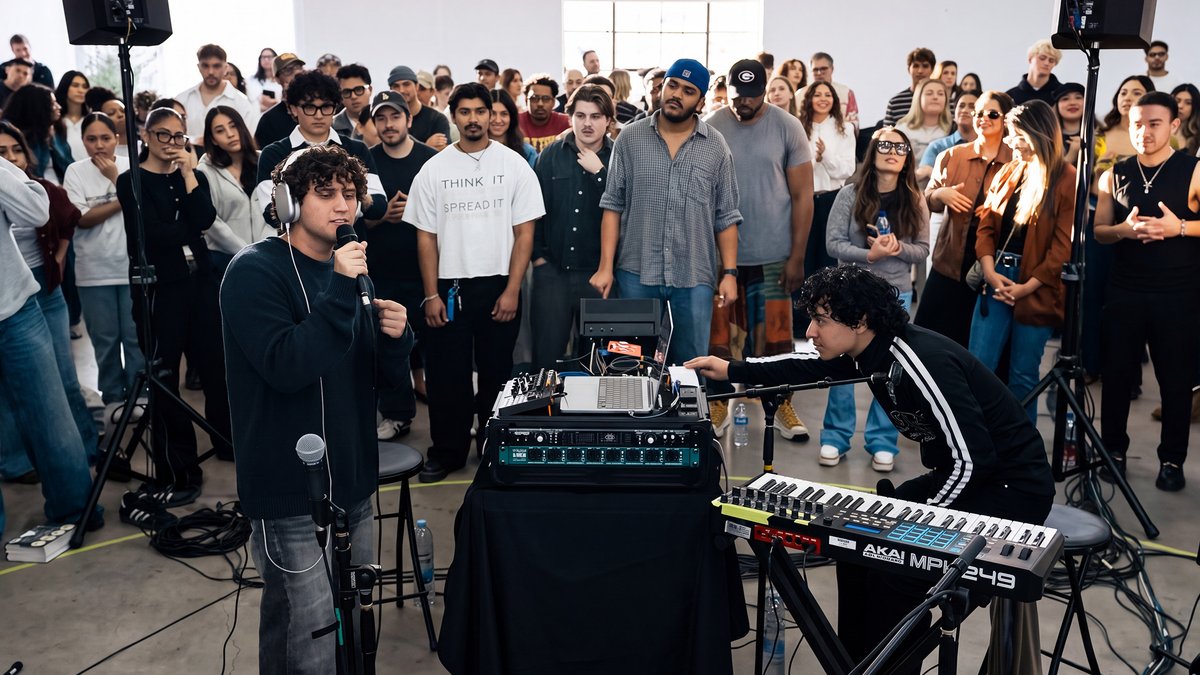
Worship music stopped being one thing a long time ago. It’s not a genre anymore, it’s an ecosystem, and the most interesting stuff happening in it right now isn’t coming from arena stages. It’s coming from living rooms, church basements and campuses full of people who met in college and never stopped singing together. Here are four collectives worth your next playlist slot.
Ashwood House
Forget the term “band.” Ashwood House is a Los Angeles worship community built around living-room gatherings, sanctuary nights and prayer sets rather than a traditional album cycle. The founder has personally funded the whole operation for years, which tracks with the vibe: this feels less like a project chasing a deal and more like a group of friends who happen to have great taste and a direct line to something bigger than themselves. Nearly 60,000 people follow along on Instagram, but the whole point is that the numbers aren’t the point. Pull up the YouTube channel and you’ll find full worship nights, not polished three-minute cuts, which is exactly the appeal.
One House
If Ashwood is intimate, One House is expansive. Founded by Touré Roberts and Sarah Jakes Roberts out of ONE | A Potter’s House Church in LA, the collective was built to blur the line between contemporary Christian music and gospel, then blur it again with R&B, hip-hop, reggae, Afrobeats and pop. Their 2023 debut, “Live Again,” landed through Re:Think/Capitol CMG and pulled in features from Chandler Moore and Naomi Raine, and the “Eyes Up” EP that followed doubled down on the same instinct: worship music doesn’t have to sound like it came out of one room, one genre or one voice. The name says it. Multiple rooms, one house.
Legacy Worship
Based out of Legacy Church in Albuquerque, Legacy Worship isn’t chasing a label deal or a viral moment. It’s the worship arm of a New Mexico church running 29 services a week across nine campuses, powered by more than 300 volunteers who lead from every kind of background and skill level. That local-first, people-first model is the whole ethos. The team cites CeCe Winans and Charity Gayle as touchstones, and it shows in songs built for a room to actually sing along to, not just watch. It’s a reminder that some of the best worship music right now isn’t trying to break out of the church. It’s trying to build one up.
One Voice
Seattle isn’t exactly known as worship-music country, and that’s precisely why One Voice exists there. Founded by Hastie and Gospel Chidi along with a group of friends who first met at Northwest University, the collective dropped its debut live album, “The Table,” in 2023 with zero promotional push. It didn’t matter. The songs found people anyway, and Tribl Records, the label behind Maverick City Music, came calling. Their follow-up, “The Remnant,” was recorded live at an OV Night in front of nearly 1,800 people, and the group has been deliberate about staying leaderless by design: no single frontman, shared decision-making, different vocalists trading off the same songs from night to night. In a region regularly ranked among the least churched in America, they’re proof that God is moving in the unlikeliest of places.
Sentinel — Human
This text reads as thoughtful editorial commentary, skillfully synthesizing anecdotal information about contemporary worship music collectives into a coherent argument about the nature of the genre's evolution.