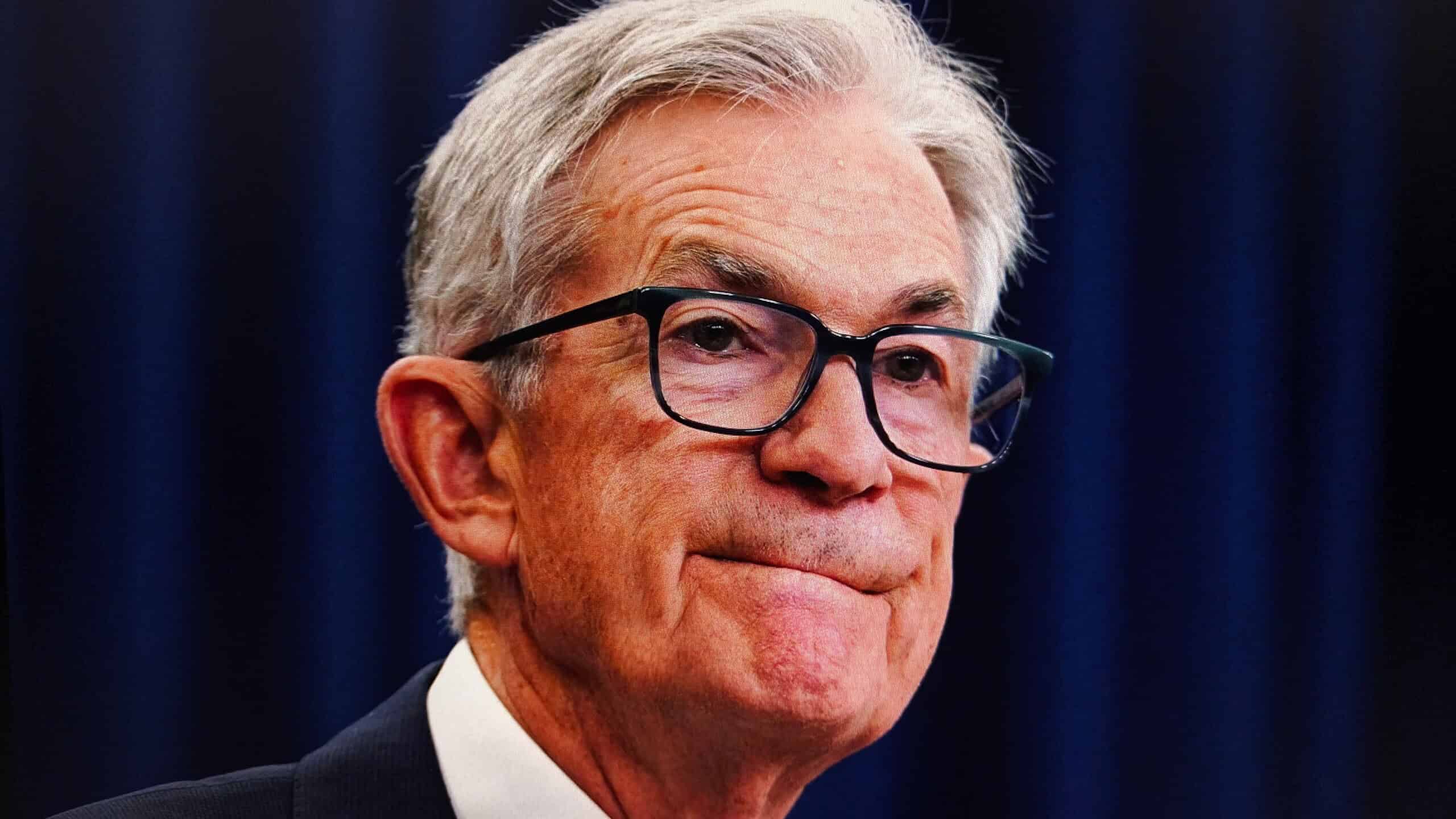
After eight years as leader of the Federal Board of Governors, Jerome Powell leaves behind a considerable legacy.
Jerome Powell concluded his final Federal Reserve Open Market Committee (FOMC) meeting as chair on April 29, but said he would remain on the Board of Governors after his term as chair ends on May 15. His four-year term on the board ends January 31, 2028.
Powell’s term was marked by his decisive move at the start of the pandemic to stabilize markets, which could have faced a financial crisis comparable to 2008, said Krishna Guha, Evercore ISI’s vice chairman, in an email interview.
“The Powell Fed was slow to pivot to deal with post-pandemic inflation, but when it turned, it turned decisively, and Powell achieved the remarkable feat of bringing inflation back down without causing a recession,” he said. “Indeed, the data clearly show Powell was on the brink of delivering the fabled soft landing when Trump tariffs pushed inflation up again.”
Guha says Powell will mainly be remembered for the “dignity and professionalism that he brought to public service,” as the Fed endured “the most serious attack on central bank independence in decades, without yielding to political pressure or making the opposite error of turning hawkish in retaliation.”
Fight For Independence
The fight to preserve the Fed’s independence truly began in President Donald Trump’s second administration and has been a sustained conflict over lower interest rates. First came accusations of ballooning cost overruns during the refurbishment of the Federal Reserve’s Washington, D.C., headquarters in late July 2025. Next came the administration’s attempt to fire Federal Reserve Governor Lisa Cook a month later, citing alleged mortgage fraud.
The Department of Justice dropped its investigation into Powell on April 24, a few days before the April FOMC meeting. The Supreme Court has yet to decide on Cook’s case.
The cessation of lawfare against the Fed was welcomed by many in the Beltway, who see it as returning to business as usual.
“I felt like the accusations that Chairman Powell had committed some sort of crime connected to the building construction were a distraction, and it would delay President Trump in selecting a new chairman,” said Republican Rep. French Hill, chairman of the House Financial Services Committee, in a public statement. President Trump has nominated Kevin Warsh, a former Fed official, as Powell’s successor. A vote on his confirmation is expected in the coming weeks.
Editor’s note: This story has been updated to indicate Powell will stay on at the Fed after his term as chair ends.
Facts Only
Jerome Powell concluded his final FOMC meeting as chair on April 29, 2026.
His term as chair ends on May 15, 2026, but he will remain on the Board of Governors until January 31, 2028.
Powell’s tenure included decisive actions to stabilize markets during the pandemic.
The Fed initially delayed addressing post-pandemic inflation but later acted decisively to reduce it.
Inflation was nearing a soft landing before Trump tariffs contributed to its resurgence.
Powell faced accusations related to cost overruns during the refurbishment of the Federal Reserve’s Washington, D.C., headquarters in July 2025.
The Trump administration attempted to fire Federal Reserve Governor Lisa Cook in August 2025, citing alleged mortgage fraud.
The Department of Justice dropped its investigation into Powell on April 24, 2026.
The Supreme Court has not yet ruled on Lisa Cook’s case.
President Trump nominated Kevin Warsh, a former Fed official, as Powell’s successor.
A confirmation vote for Warsh is expected in the coming weeks.
Republican Rep. French Hill stated that the accusations against Powell were a distraction and delayed the selection of a new chair.
Executive Summary
Jerome Powell concluded his final Federal Reserve Open Market Committee (FOMC) meeting as chair on April 29, 2026, but will remain on the Board of Governors until his term ends on January 31, 2028. His tenure was marked by decisive actions during the pandemic to stabilize markets and a later pivot to combat post-pandemic inflation, achieving a soft landing before external factors like Trump tariffs disrupted progress. Powell is credited with maintaining the Fed’s independence amid political pressure, including accusations of financial misconduct and attempts to remove Federal Reserve Governor Lisa Cook. The Department of Justice dropped its investigation into Powell shortly before his final FOMC meeting, while Cook’s case remains pending before the Supreme Court. President Trump has nominated Kevin Warsh as Powell’s successor, with a confirmation vote expected soon. Observers note the cessation of legal challenges against the Fed as a return to normalcy, though political tensions over monetary policy persist.
The narrative highlights Powell’s legacy as a leader who balanced economic stability with institutional integrity, navigating unprecedented political interference while steering the economy through volatile periods. The transition to Warsh’s leadership raises questions about the Fed’s future direction, particularly in light of ongoing debates over interest rates and central bank autonomy.
Full Take
The narrative presents Jerome Powell’s tenure as a study in institutional resilience, framing his leadership as a bulwark against political interference while navigating economic turbulence. The strongest version of this story credits Powell with preserving the Fed’s independence amid unprecedented attacks, including legally dubious accusations and attempts to remove a sitting governor. The article acknowledges his economic record—stabilizing markets during the pandemic and later taming inflation—while noting external disruptions like tariffs. However, the pattern scan reveals potential framing biases. The portrayal of Trump’s actions as an "attack on central bank independence" leans toward emotional exploitation (ARC-0012), amplifying the stakes without equivalent scrutiny of the Fed’s own policy delays or the broader context of executive-legislative tensions. The dismissal of the DOJ investigation is presented as vindication, yet the unresolved Supreme Court case involving Lisa Cook introduces uncertainty that isn’t fully explored.
Root cause analysis suggests a deeper paradigm: the Fed’s role as a technocratic institution is increasingly contested in an era of populist skepticism toward elite expertise. The article assumes the Fed’s independence is inherently virtuous, but this glosses over legitimate debates about democratic accountability in monetary policy. The implications for human agency are significant—central bank autonomy may shield economies from short-term political whims, but it also insulates decisions from public input, raising questions about whose interests are served.
Bridge questions: How might the Fed’s legitimacy be strengthened without compromising its operational independence? What safeguards could prevent future administrations from weaponizing oversight while ensuring transparency? If Warsh’s confirmation proceeds, how might his leadership differ in balancing economic goals with political pressures?
Counterstrike scan: A coordinated influence campaign would likely amplify the "Fed under siege" narrative to rally support for institutional autonomy while downplaying valid critiques of its policies. The article’s focus on Trump’s actions as aberrant—rather than part of a broader trend of executive overreach—could serve this purpose. However, the content doesn’t fully match such a playbook, as it includes critical perspectives (e.g., Powell’s delayed inflation response) and acknowledges unresolved legal matters. The tone remains measured, avoiding overt manipulation.
Patterns detected: ARC-0012 Emotional Exploitation (moderate)
Sentinel — Human
The text exhibits strong human characteristics, featuring nuanced contextual framing and the integration of specific, time-sensitive political narratives rather than purely synthetic pattern repetition.